
April already! Where did that time go? While everyone was busy hunting eggs and eating chocolate, new life in all shapes and forms was popping up around the park. It really is a time of reawakening and what a glorious time it is. I thought I would put my first Spring Watch blog together and show you some of what is happening around the park right now.

There is so much going on at the moment that I thought I would try to show you some of it. As many of you know, Charlecote is in the middle of lambing and there are some very cute Jacob lambs up in Polo field right now. If you would like to see them you can go join one of the organised walks to see the fluffy lambs until the 15th of this month.


They are very adorable. I can sit and watch them jumping around for a long time. They are so funny.

For more on the Lambs and lambing, see my previous blog.
There were also more new arrivals a couple of weeks ago. The Tamworth Pigs. The three little pigs. I believe they are around 11-12 weeks old now. Pigs grow very fast, you blink and they are the size of adults! A favourite with adults and children.


This is why West Park is closed at the moment so that the heronry can thrive. If the herons lose their young while nesting in the Charlecote Heronry, they won't come back the following year.

Herons can start laying their eggs as early as February but most lay them a little later during March or April. They normally lay 3-4 eggs but can lay more. The eggs take around 27 days to hatch and then the young will remain in their nest for a couple of months before starting to explore for themselves. At the moment there are quite a few pairs of herons nesting and some of the eggs have hatched but they will be too small to see at the moment. I think they are magnificent creatures. something very prehistoric about them.


Grey herons do not migrate unless it is exceptionally cold but they do often move closer to the coast where there is plenty of fish to be had. There are a couple of resident herons that can be seen around the park from time to time, mostly along the River Dene close to the old stone bridge that comes into Charlecote Village.

There are also many changes with the deer at the moment. They are quickly losing their Winter coats and with that they will also be casting their antlers. The first buck to lose an antler has done so in the last couple of days. They always look so sad when they lose them and very strange, especially when they have only one left.

When I spotted a buck on his own, I guessed what had happened. Buck's normally stay together in a group as they are normally very sociable animals. Once their antlers drop, they wander off on their own leaving the main herd but it is not long before all the other bucks are in the same boat and stand firmly together again. Antler free, they look so much gentler and behave like it too. I think nature
is quite clever, the bucks lose their antlers and become all soft just before the fawns are born. It just makes sense.

The other bucks still with their antlers for now but are shedding their Winter coats fast.


I love watching the deer but mostly in Autumn and at this time of year as they go through so many changes and of course new life is coming very soon too. I am so excited about seeing the new fawns in a couple of months. I can happily wallow away many hours watching them.

This buck was a little cheeky! Guess he didn't want his photo taken!

The gardens are also changing every week now. Every time I visit there is something new to see. The Tea Garden is looking very pretty at the moment with lots of colour coming up everywhere.


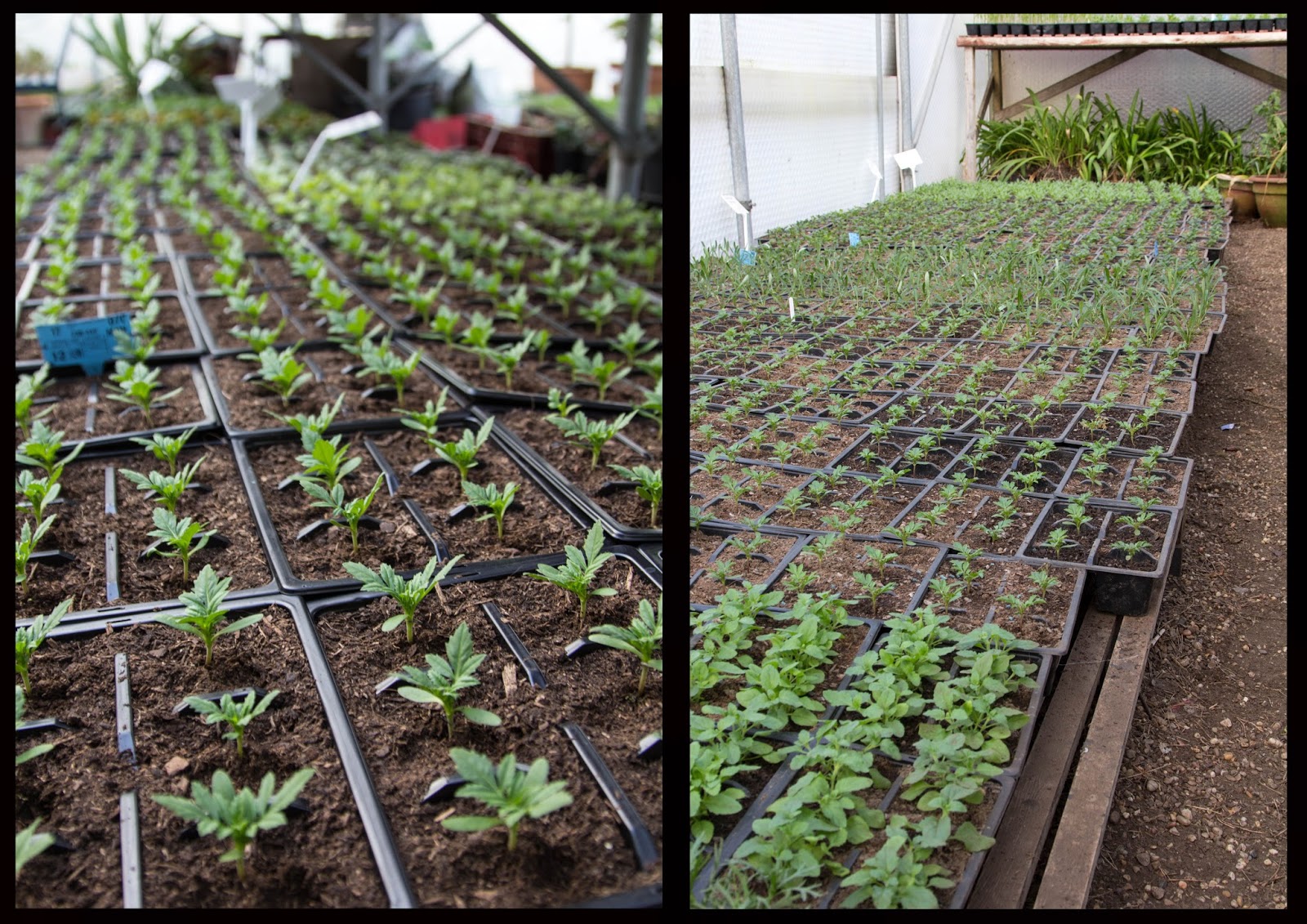
I also had a sneaky look inside the greenhouse so here is a little 'behind the scenes' look. I found so many seedlings. I am so looking forward to see how the gardens change through the seasons this year. Lots of beautiful flowers for me to photograph.



These beautiful plants in the picture below which are also in the greenhouse, are replanted through time and sit on the windowsills inside the Orangery for you to see as they open.


There are beautiful colours popping up everywhere now. I love the ever changing gardens and I love tulips because their colours are so varied and vibrant.
The red tulips just a week ago.

Look at them now!

Tulips, Daffodils and new life is what Spring is all about and I love it !


These lovely tulips were in front of the Summer House.


The next flowers which everyone knows are always a sign of Spring. I found these at the beginning of the long border close to the Summer House. Daffodils and Narcissus I can never tell apart so I will not try to name them.

I loved the blue in these next flowers, it reminded me that it won't be long until we have Bluebells.
It is called 'Scillia Siberica,' or 'Wood Squill', native to southern parts of Russia and Turkey. It's very pretty.

The beautiful tulips in the pots as you walk through the gates from the house into the garden.

The same tulips open a few days later.


The Garden really is waking up after its long Winter sleep and there will be no stopping it now.

Below is the beautiful tulips in front of the Summer house and the blue 'Muscari', commonly known as the 'Grape Hyacinth' which is a very old woodland plant.

The pots outside the Orangery are also bursting with colour.

Blossom on the fruit trees.


The Woodland Garden is also reawakening.

Bergenia


Helleborus.

'Leucojum Vernum' which is also known as 'White Snowflakes' and 'Loddon Lily' and which I really like. They flower just as the Snowdrops fade and replace them in a way. This plant is native to central and southern parts of Europe.

The Snowflake as it opens.

There are a couple of pairs of Swans that live on the Charlecote Estate. One of which normally nests in the middle of one of the islands in the lake. The second pair on the River Avon. This Swan below is one of last year's young, still with it's brown feathers.

Next we have a Chaffinch which is native to this country. The male's colours are much brighter than that of the female. The male birds have a very strong singing voice. The Chaffinch will normally lay around 4 eggs which will take about 13-14 days to hatch. The chicks leave their nest at only 14 days old which I think is amazing! They will carry on being fed by the parents for many weeks after leaving the nest but it always amazes me how quickly birds grow from the time they are hatched. Last year I loved my time with the local Volunteer Ornithologists ringing group and I am hoping to go back out with them again this year so watch this space. Which reminds me, the Barn Owls are back :)


Canadian Geese are not so different to Swans in that they pair for life and both male and female look alike. The only way to tell a male goose from a female is when they are together. The male will be the largest of the two.

There are also Mallard ducks on both the lake and in the River Avon.

Egyptian Geese just passing through , stopping for a rest and a spot of lunch.


The Moorhens can be seen on the lake but you have to really look for them as they are a little shy. They also nest in the reeds next to one of the Islands on the lake.

The Redwing is Britain's smallest true Thrush. This one was spotted on the back drive along the River Dene. I only noticed it because it was singing so I looked to see where the noise was coming from. It was fluttering from one tree to the next.

Our lovely friendly Robins are here all year around and can be seen all through the woodland Garden.

This little Robin is often in the long border and the Woodland Garden.

I have also seen plenty of other wildlife as I have walked around Charlecote Park but they have either been too fast for me or my lens wasn't quite long enough, like for the hares on Camp Ground. But I will get them one day! :)
I am so looking forward to the coming weeks and photographing all that happens.
Hope you enjoyed the first of my Spring Watch blogs. More coming very soon.
For more on Charlecote Park http://www.nationaltrust.org.uk/charlecote-park/
Copyright Jana Eastwood


