Walking through the gates of Birmingham Roundhouse for the very first time back in March 2016, I could easily imagine the hustle and bustle of life back in 1874 when the Roundhouse was first built.


It was originally built to stable the horses needed for the canals and as stores for the Birmingham Corporation. It quickly became a very busy place for barges to load and unload goods. The building, now a grade II* protected building, is horseshoe shaped and was designed by local Birmingham architect W.H Ward.


You can see in the next two pictures how goods would have been lifted into the loft storage rooms above the horses stabled below.


The cobbled surface.


This building has been used for many different purposes from a taxi office, photo studio, antique shop to a nursery but over the years the building and it's surroundings have been neglected and now need lots of work doing to it to preserve it for future generations.

A little colour growing in the borders by the canal in front of the Roundhouse alongside some Rosemary.


In it's busiest time in history, the Birmingham canal system stretched some 160 miles through and around the city , Today, just 100 miles is usable and much of that is used by residential narrow boats and tourists who either hire narrow boats for holidays or join others on a tour boat.

The Roundhouse sits in a busy prominent place in the middle of all this and it is easy to understand why it became so popular in it's time.

Through restoring this outstanding building, it is hoped that once again life can be brought back to this building.


Work will hopefully start later this year but already access has been allowed for a few special organised events. Some of these events I had been asked to cover as a Volunteer Photographer for the National Trust which enabled me to see them first hand. I think it's a great idea to show people what this building is like before work starts. The events started with the Un-tours. Small tours lead by local poets who showed you around the building and told stories of the history behind the Roundhouse and why it is so important to restore it. They did this in a special modern fun way. A way you wouldn't forget so easily and of course in poems.


https://twitter.com/spozpoet
It was also the first time I met the Lovely Rachel Sharpe (Visitor Experience Development Manager for the Roundhouse) . A lovely lady who I have had the pleasure of working with a few times now.
It is hoped that the Roundhouse will become an important part of the local community and already it has been used in conjunction with other events around the City. One such an event was another I had the privilege to be at. It was Birmingham's Literature Festival 2017

https://www.birminghamliteraturefestival.org/2017-photo-gallery/
Over a weekend in a few places around Birmingham, poet's and writers lead writing workshops or spoke about what they did. Birmingham's Roundhouse was one of such places. On the first day, the Friday, I had the pleasure of meeting Mandy Ross a writer of children's books and much more.

Mandy lead a walk along the canal towpath from the Roundhouse taking in all we could see from the Graffiti on the walls to evidence left behind from the people who used to work along the canal. She pointed things out that you might not have noticed just wondering on your own.

Back at the Roundhouse after the walk, everyone discussed what they had seen and the writing began. I listened to much of the work created within these groups and they were really good. The day ended with each person writing some of their thought or words on a ribbon which was tied to the Roundhouse gate.

Sunday morning started with a totally different way of exploring the canals of Birmingham for writing inspiration and with two very different writers. The first was Alys Fowler who many will know from Gardeners' World. Alys is a horticulturist and has a weekly column in the Guardian.

The second, Garrie Fletcher who writes short stories, novels and poems.

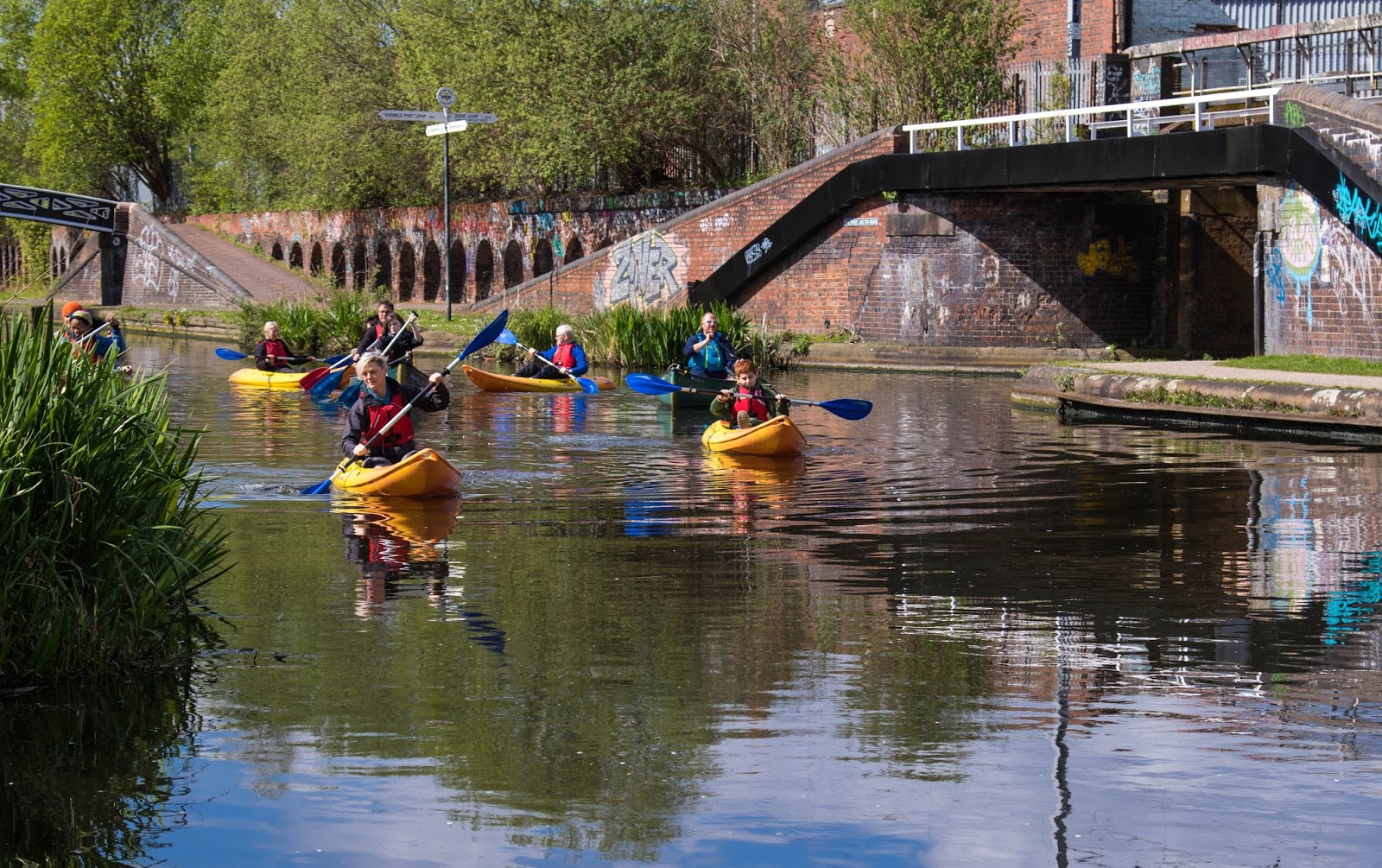
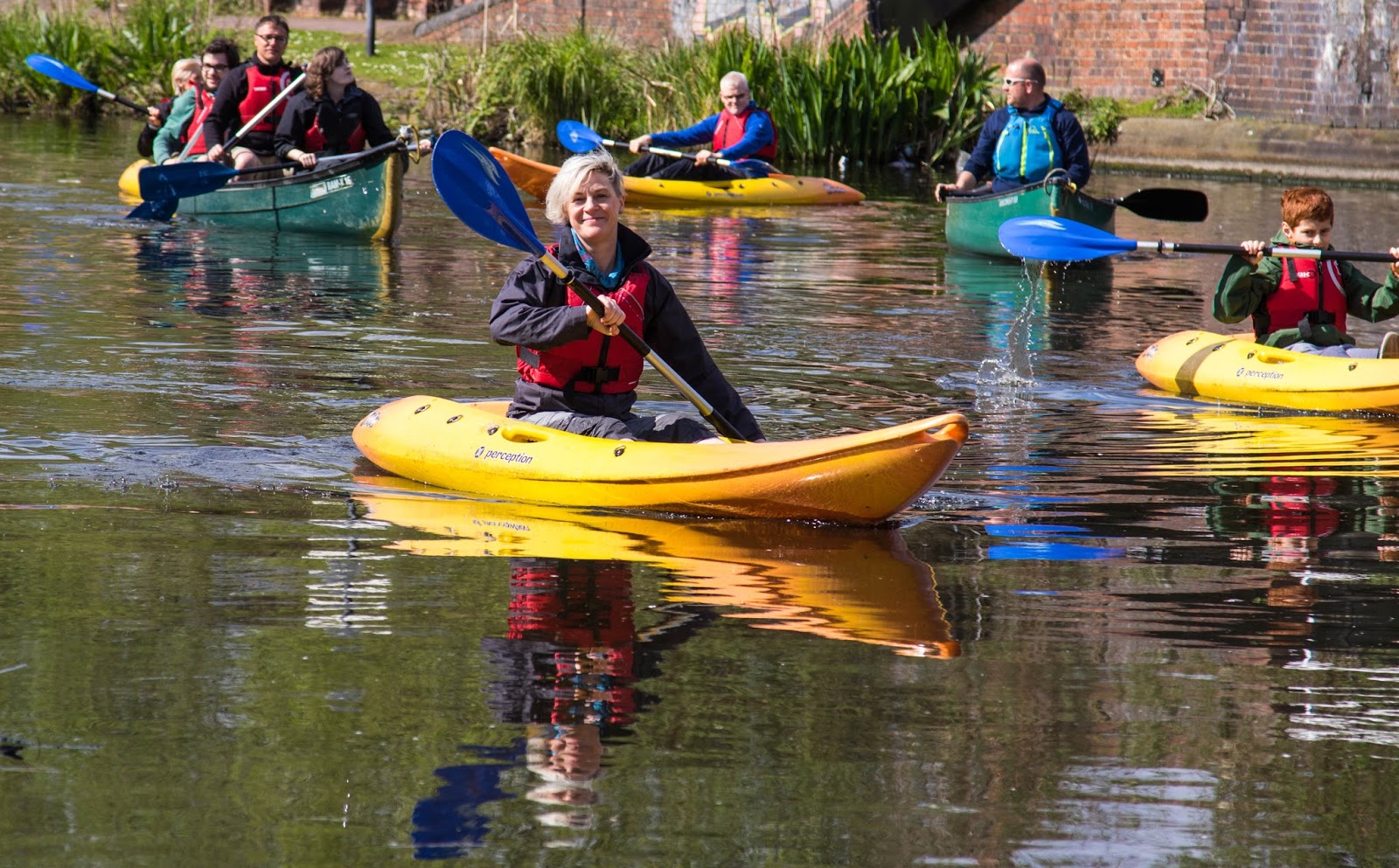
This time exploring the canal by canoes and kayaks with the help of the B-Row team.


Now you have to remember I was on foot taking photos so these boats kept me at a bit of a pace at times but every now and then they would stop and Alys would talk about the canals to help inspire budding writers. The Birmingham Literature Festival to me and many others is very important. I think it does inspire others to write and writing is an always good as it could so easily become a lost art along with many other things these days.


Alys mentioned how she is often on the canals in a canoe, she has her own blow up boat which takes her wherever she wants to go.

Garrie enjoying the water ways

The canals ways are great for reflections of all sorts. They are a good place to take a walk or a boat and just lose yourself for awhile but you also get some really good reflections on the waters which is great for photographers too! ;)


Even though the day started cloudy, there were still some great reflections.

I love the next photo. All to often you see people standing by the water watching the wildlife swim by, it was so lovely to see these geese watching the boats float by instead. It was almost like they were watching a race waiting to see who won!


I love it when writers inspire others to write and what better surroundings to write about the canals than in the Roundhouse which is seeped in canal history.

Garrie was really good with the younger audience and I think he might have found a seriously talented young writer or two in his group.

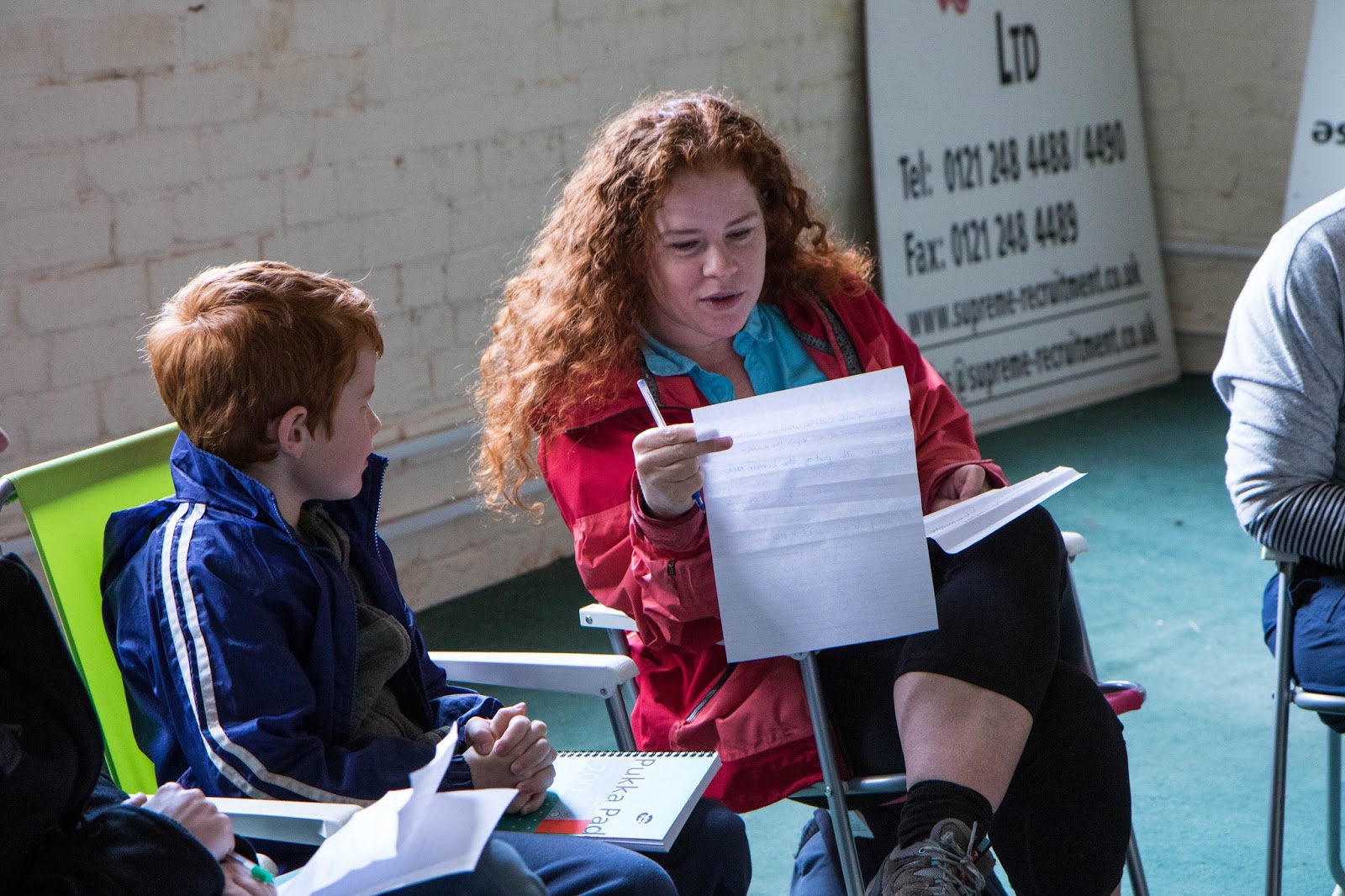
https://belljarblog.wordpress.com/

Jo lives on a canal boat and much of her inspiration comes from that. She covers many topics others would not dare to but that is what I like about her. Nowhere is she more at home than on the canals.

The group disappeared down a canal way I could not go on foot so I took this time to explore a little of the area by myself.


It was at this point I spotted something I really did not expect to see in such an urban area. A Grey Heron! Now I am used to seeing these bird often as many of you know , I am based at National Trust's Charlecote Park which has the second largest Heronry in Warwickshire but this was different, even the behaviour was different to anything I had observed before. It did teach me one thing, with time, wildlife does adapt.


I have learnt so much about city life and the canals through the Birmingham Roundhouse.

One of the tourist boats on the canals.

I am not sure why there is a tower of bricks in the middle of the canal, if anyone can help me with this info, please feel free to comment below.


More Wildlife on the canals. Canadian Geese.


I had walked along the canal to the next bridge hoping this was the bridge the canoes and kayaks would come through and it was . :)

We really couldn't have asked for better weather.
Back on dry land at the Roundhouse after lots of inspiration from Jo.


I was lucky enough to be able to pop into both Jo and Garrie's writing work sessions which were in different rooms within the Roundhouse. I clicked away on my camera making sure I also took in a lot of what was said which I found very interesting and enjoyable.


Listening to some of the words written by the people who joined them for the afternoon, you knew they were going home with much to think about, I was too!
It has been an interesting journey to see the Roundhouse at the beginning of it's new adventure, before the changes begin and to follow it as it has been used for different events. I am really looking forward to seeing how it develops in the future. Already the skyline around this building is changing and as time goes by, this hidden gem will be nestled safe amongst the new history being built around it.


For more information on The Birmingham Roundhouse, follow this link.
For more on the canals around Birmingham follow this link...
Copyright
Jana Eastwood